
Introduction to competency and strengths-based questions
The recruitment process for City careers can involve an application stage, psychometric testing, a phone or Skype/video interview, group exercises and an assessment centre at the firm’s offices. These stages are predominantly designed to help a firm learn more about your strengths, capabilities and suitability to the role for which you are applying.
Competency questions tend to focus upon your ability to showcase the skills that are necessary to succeed in your chosen career. They will typically require you to explain how you developed key skills through your previous experiences, or how your experiences required you to apply the necessary skills.
Firms may ask for examples of when you have demonstrated or acquired specific skills or strengths. They may ask about particular experiences or challenges you’ve faced. Or they may try to assess your skill development through evaluating your contribution/reaction in different scenarios (e.g. “when have you successfully led a team through a difficult situation?”). Ultimately, they will want to know why your interests, experiences, competencies and strengths make you an ideal candidate.
You may face ethical questions, such as “would you ever pay a ransom?” (this came up for me) or “have you ever done anything ethically questionable?”. Or you may be asked more open ended questions to assess your character and thought process, such as “when have you failed at something?”, “what motivates you?” or “why did you choose your degree?”.
Questions can also be quite specific at times. For example, I was once asked to talk about a time when I had worked in a team and had to deal with a colleague that was not pulling their weight. The more experiences you have in the forefront of your mind, the better prepared you’ll be to deal with specific or unexpected questions.
With all this in mind, over the next three chapters we cover the key types competency, strengths and skills-focused questions that you’ll likely come across, including why they are relevant and how to approach them. As part of this, we include advice from a careers adviser and an ex-graduate recruiter in connection with some of the trickier questions that may come your way.
How to prepare?
To prepare, research into the key skills and strengths that each firm is looking for - including each firm’s specific explanation of what they mean by each skill and strength, as this can differ - then try to cover most (or all) of these in your answers. In addition, try to meet with people who have already been through the interview process at the firms you are applying to. They may be able to provide an insight into the types of questions that the firms may ask, or introduce you to someone who can. You can also attempt to research the types of question that firms have previously asked candidates online (although don’t assume your interview questions will be identical to the questions faced by others).
Firms generally emphasise the skills that they most value during campus presentations and office visits and on their websites. Although many firms stress similar skills, some firms may place greater emphasis on one or two particular skills or values. Different firms (and even different interviewers within the same firm) take very different approaches to competency interviews, so be prepared to adapt your answers.
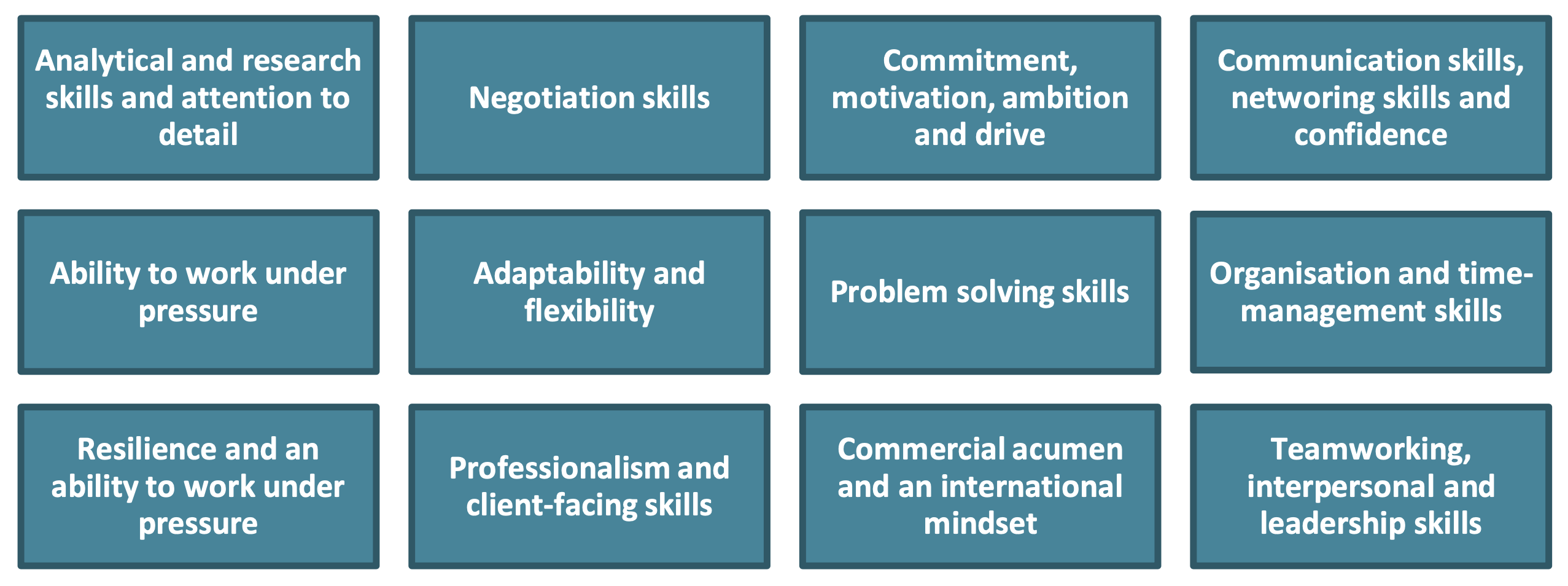
Here are some examples of the key skills that you might want to consider:
Once you’ve decided which competencies and strengths you will prepare for, think about which of your experiences will best demonstrate each. Helpful preparation can include listing out all the interesting and/or relevant experiences that you have accumulated. Include positions of responsibility you have held, societies and sports teams you have been involved with, interesting group projects you have undertaken at university, part-time jobs and work experience in industries relevant to the organisation to which you are applying. Consider the particular skills and strengths that could be drawn out of each. You should then be ready for competency-based questions.